
Why Asking Questions Is Essential for Childhood Development
You’re trying to fold laundry, answer a work email, or just steal five quiet minutes with your coffee, and then it starts: “Why is the sky blue?” “Why do dogs bark?” “Why can’t we eat pancakes for dinner?” It’s easy to brush it off as a phase. Some days, it genuinely feels like a test of your patience. But what if I told you that every single “why” is actually a tiny, invisible brick in the foundation of a child’s mind?
The Myth of the “Annoying” Phase
Society loves to label the question-heavy years as “the endless why stage,” like it’s something to survive rather than something to celebrate. But curiosity isn’t a behavioral glitch. It’s a developmental superpower. When kids ask questions, they aren’t just hunting for facts. They’re mapping cause and effect. They’re testing boundaries. They’re learning how to trust their own minds enough to wonder out loud.
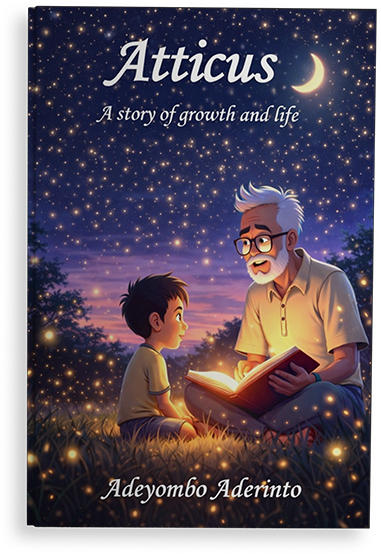
In Atticus: A Story of Growth and Life, author Adeyombo Aderinto doesn’t write a traditional parenting guide. He writes a letter to his newborn grandson, one that doubles as a quiet blueprint for how to raise a thoughtful human in a noisy world. And right at the center of that blueprint? The courage to ask.
A Grandfather’s Compass for Curiosity
Borrowing from Rudyard Kipling’s famous “six honest serving-men” (Who, What, When, Where, How, and Why), Aderinto frames curiosity as a lifelong navigation tool. He tells Atticus plainly: “Asking is the first step to knowing. The silliest of questions are those not asked.”
It’s a gentle but profound reminder that questions aren’t just for classrooms. They’re for life. They’re how we figure out who we are, what we stand for, and how to move through the world without blindly following the crowd. Aderinto isn’t romanticizing childhood curiosity; he’s treating it as essential infrastructure. And honestly? He’s onto something.
How Questions Build Critical Thinking
Schools teach kids to use questions for reading comprehension, math problems, or science labs. But real life doesn’t come with answer keys. It comes with gray areas, conflicting headlines, peer pressure, and moments where you have to figure out what’s actually true for yourself.
That’s where How and Why step in. As Aderinto writes, “Never give up your How and Why; only these minions will clear the mist when things get foggy.” Teaching kids to ask these questions isn’t about making them argumentative. It’s about making them discerning. It’s about giving them the mental muscle to pause before reacting, to look for context before jumping to conclusions, and to understand that most big problems don’t have one right answer; they have layers.
The Social-Emotional Superpower
Here’s the part we often overlook: questions are deeply relational. When a child learns to ask “Who needs help right now?” or “What happens when I say it this way instead?” they’re building empathy. They’re practicing perspective-taking. They’re learning to read a room before they speak.
Aderinto bridges this beautifully by pointing out that academic and professional success actually falls flat without social-emotional depth. You can raise a kid who aces every standardized test, but if they don’t know how to ask “Why did my friend shut down?” or “How can I repair this?” they’re missing the core metric of a well-lived life. Questions aren’t just cognitive tools. They’re emotional bridges.
Navigating the Age of Instant Answers
It’s harder than ever to raise curious kids in a world that rewards speed over substance. Algorithms serve them what they already like. AI drafts their homework. Even well-meaning adults often shut down questions with quick fixes because we’re tired, busy, or, honestly, we just don’t know the answer either.
But here’s the quiet truth Aderinto shares through his letters to Atticus: you don’t have to know the answer to honor the question. In fact, saying “I don’t know. Let’s figure it out together” might be one of the most powerful things you can say to a child. It models humility. It shows that learning doesn’t magically stop at adulthood. And it tells them, clearly and consistently, that their curiosity matters more than your convenience.
What to Do When You’re Out of Patience (Because We All Are)
You don’t need to turn every car ride into a philosophy seminar. But you can shift your approach slightly, without adding anything to your plate:
- Flip it back gently: When they ask “Why do leaves change color?” try, “That’s a really good question. What’s your guess?”
- Sit with the fog: It’s completely okay to say, “I’m not sure. How could we find out?”
- Validate the “silly” ones: Aderinto reminds us that the silliest questions are the ones never asked. Even the wild ones (“Can clouds taste like cotton candy?”) are low-stakes practice for imagination and creative problem-solving.
- Model your own wondering out loud: Let them hear you think. “I wonder why that streetlight flickers.” “How do people learn to play instruments so well?” Curiosity is contagious, and kids catch what we model, not just what we teach.
The Long Game: Raising Humans, Not Just High Achievers
At its core, Atticus isn’t a manual for producing straight-A students. It’s a love letter to the next generation, rooted in the belief that character, empathy, and self-dignity matter more than accolades or efficiency. Aderinto writes from a lineage of elders who passed down wisdom through presence, storytelling, and lived example. And the thread that ties it all together? The courage to keep asking.
Not for grades. Not for approval. But for understanding. For clarity. For connection.
When we encourage kids to question, we’re not just teaching them how to learn. We’re teaching them how to live. How to navigate uncertainty without panic. How to hold space for viewpoints that differ from their own. How to grow through mistakes instead of crumbling under them. As Aderinto puts it, wisdom isn’t handed down in tidy packages. It’s “seasoned by questions.”
Start Small. Start Today.
You don’t need a grand curriculum, a perfectly organized learning space, or endless free time to foster this. Just a little patience, a lot of grace, and the willingness to let the conversation meander. Next time your kid hits you with a rapid-fire round of whys, take a breath. Don’t rush to fix it. Lean in. Wonder with them. Let them see that the world is big, mysterious, and wildly worth exploring.
Because the kids who learn to ask good questions today? They’re the ones who’ll navigate tomorrow with clarity, courage, and a whole lot of heart. And honestly? That’s the kind of legacy we all hope to leave behind.